
If you require a different size or material, please contact us
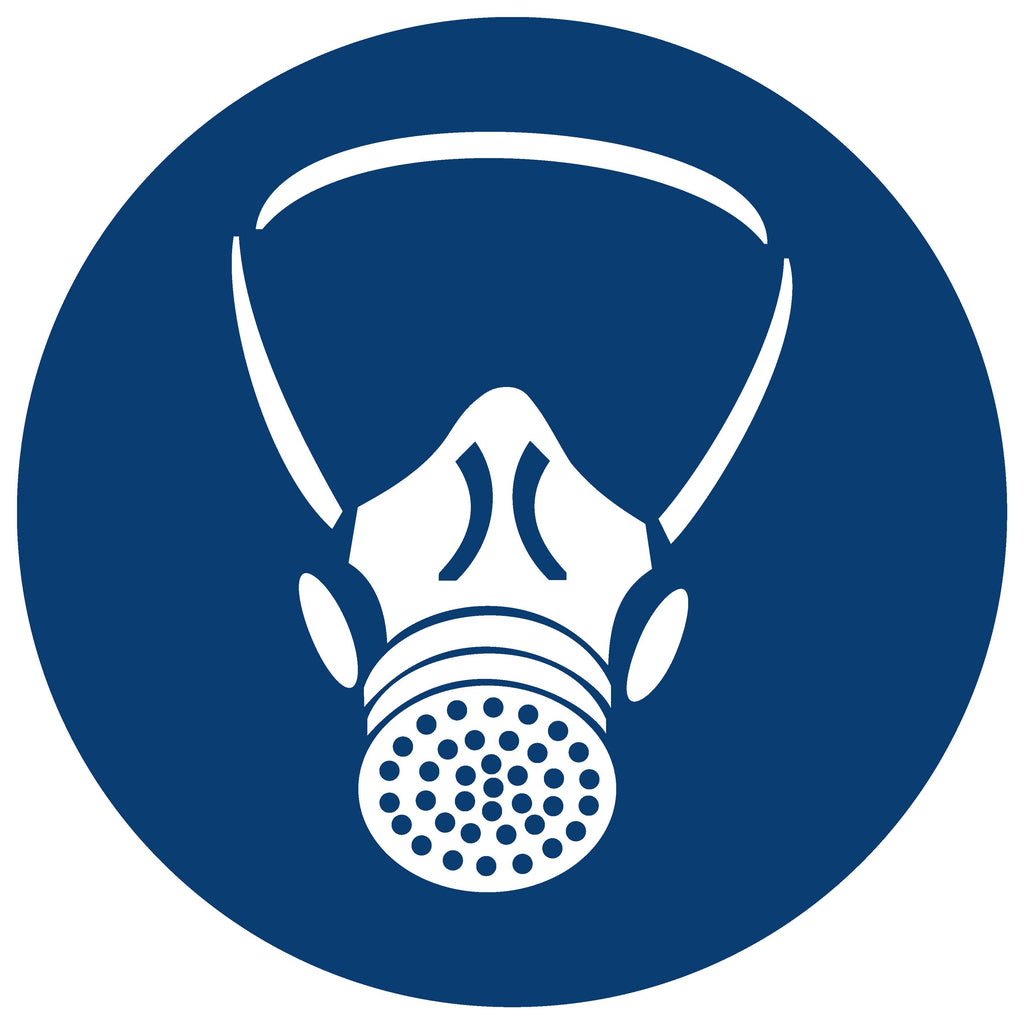
The Respiratory Protection Shall Be Worn safety sign (MV2) is used to require respiratory protection at the point where compliance is required. Mandatory signs instruct specific actions that must be carried out to reduce risk and maintain safe working conditions.
Purpose and function
This sign reinforces compulsory safety requirements to reduce inhalation of dusts, fumes, vapours, or airborne contaminants. It supports consistent behaviour across teams, reduces ambiguity for contractors and visitors, and forms part of a broader risk control system alongside training and site procedures.
Typical applications
- Work areas where PPE is required due to identified hazards and risk assessments
- Entry points to controlled zones where compliance must be confirmed before access
- Workshops, warehouses, and operational areas with machinery, tools, or hazardous processes
- Sites with contractors or rotating staff where consistent instruction reduces errors
Commonly used with
- Beware Of Poisonous Substances SABS safety sign
- Beware Of Biological Hazard SABS safety sign
- Beware Of Asbestos SABS safety sign
- Shelter In Place SABS safety sign
Selection and placement guidance
Place mandatory signs at entrances to controlled areas and at the point where the required action must be taken. Position within the normal line of sight, maintain consistent mounting heights across a site, and ensure the sign remains unobstructed. Where multiple actions are required, use a coordinated set of signs or a combined sign format to reduce confusion.
For broader guidance on safety sign categories, colours, shapes, and correct selection, refer to our Safety Signs Explained guide.
Visibility and material options
This sign is available in standard sizes and materials suited to typical indoor and outdoor applications. Select a size that matches viewing distance and environment, and choose a substrate appropriate to the exposure conditions. Where the instruction must remain visible during power failure or low-light conditions, consider a photoluminescent option where available in the range.
For applications requiring extended emergency wayfinding or enhanced visibility in low-light conditions, view the full range of photoluminescent safety signs.
Compliance
In South Africa, safety sign designs follow South African National Standards (SANS), including SANS 1186-1:2022, which governs the design, colours, shapes, symbols, and application of safety signs and safety markings. These standards are administered through the South African Bureau of Standards (SABS) to promote consistent recognition across workplaces and public environments.
SANS 1186-1:2022 aligns closely with internationally recognised standards, including ISO 7010 and ISO 3864-3, ensuring familiarity and clear understanding across different industries and regions.